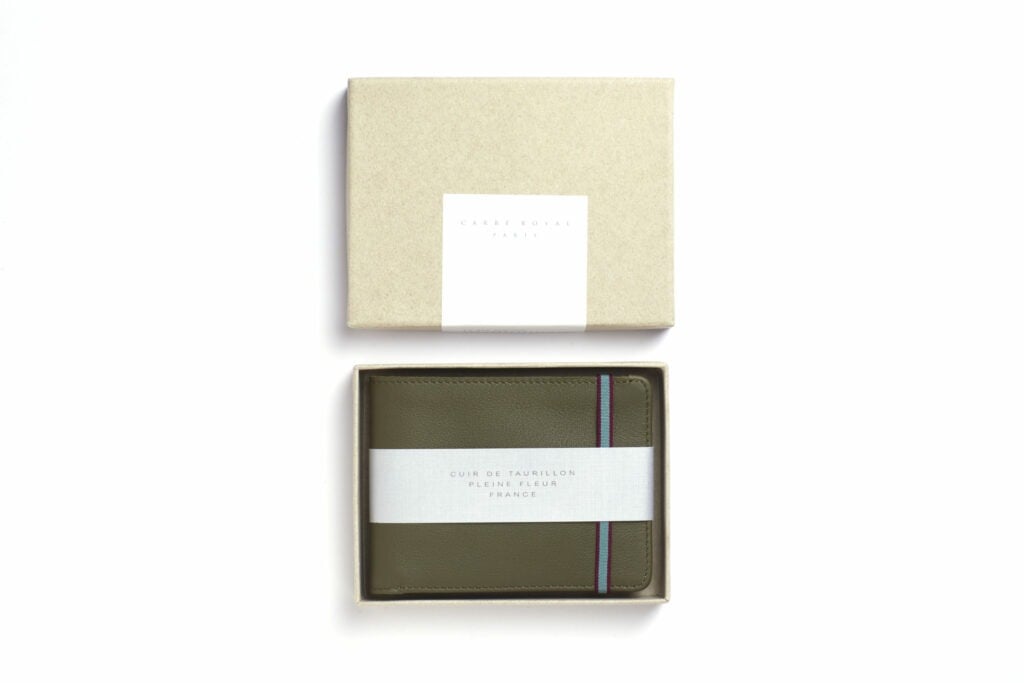
A full-grain leather wallet asks for very little, that is one of the reasons to choose one. Unlike delicate materials that demand constant attention, taurillon (bull calf) full-grain leather was made to live: to be handled every day, slipped into pockets, taken out in all weathers. Yet a few simple gestures, practised once or twice a year, make the difference between a leather that merely ages and a leather that grows more beautiful. This guide covers them all.
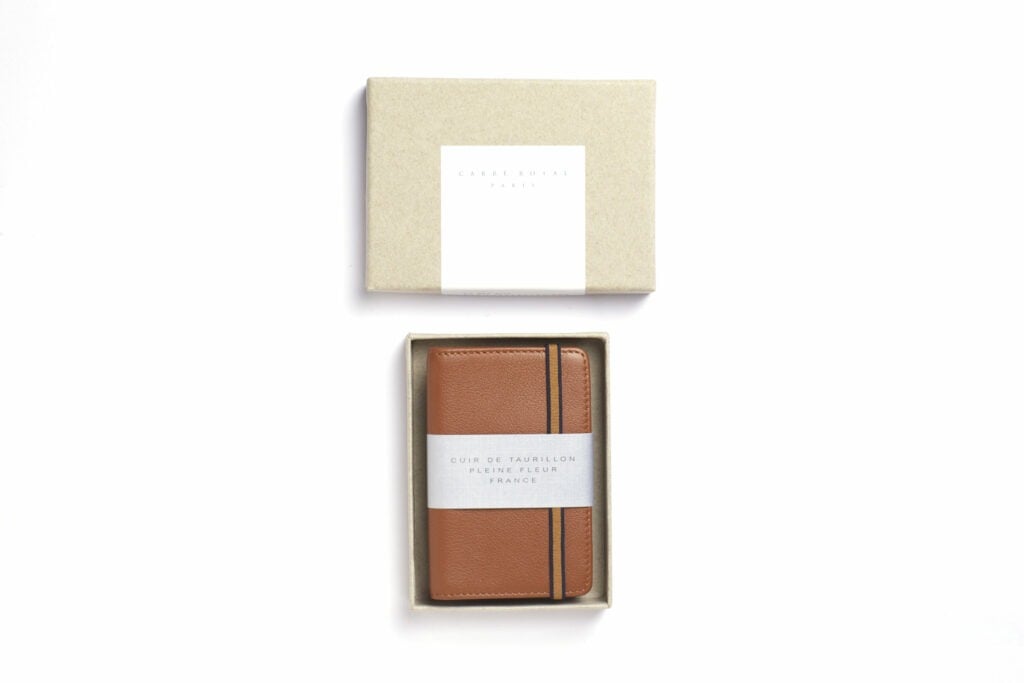
The first principle: full-grain leather wants to be used
Let us begin with what care is not. Caring for a full-grain leather wallet does not mean protecting it from life. The grain of the leather, the outer surface of the hide, kept intact rather than sanded away, is naturally dense and resistant. Daily handling is not a threat to it; it is precisely what develops its patina, that gradual deepening of tone and softening of touch that distinguishes fine leather from every imitation.
So the first rule is the easiest one to follow: carry your wallet. Use it. The oils of your hands, the warmth of your pocket, the small frictions of the everyday are not wearing it out, they are writing into it.
Cleaning: less than you think
For regular cleaning, a soft, dry cloth is enough. Pass it gently over the surface from time to time to remove dust, that is all the leather needs in ordinary circumstances.
If a mark appears, use a cloth very slightly dampened with water, never soaked, and wipe without rubbing hard. Let the leather dry naturally, away from any heat source. What to avoid is more important than what to do: no household cleaning products, no alcohol, no wipes, no solvents. These strip the leather’s natural oils and can permanently alter the colour, particularly on the luminous shades of our Nuancier, whose depth depends on the finish remaining intact.
Nourishing: once or twice a year
Leather is a natural material; like skin, it appreciates being nourished occasionally. Once or twice a year, no more, apply a small amount of a neutral, colourless leather balm or cream with a soft cloth, in light circular motions. Leave it to absorb for a few minutes, then buff gently with a clean cloth.
Two precautions. Always choose a neutral (colourless) product: pigmented creams can shift the tone of a coloured leather. And always test first on a discreet area, the inside of a flap, the back of a pocket, before treating the whole surface. On a wallet that spends its life in a pocket, absorbing a little natural oil from handling, even this annual gesture is sometimes unnecessary; let the leather tell you.
Rain, sun, heat: the three situations to know
Rain. A few drops are harmless, wipe them away with a dry cloth. If the wallet gets properly wet, resist the urge to speed things up: dry it gently with a clean cloth, then let it dry slowly at room temperature, ideally slightly open so air circulates. Never on a radiator, never with a hairdryer, rapid heat is the one thing that can genuinely damage leather, stiffening it and cracking the grain.
Sun. Prolonged direct sunlight gradually softens the intensity of colours, noticeable most on vivid shades. A wallet lives in a pocket or a bag most of the time, so this rarely matters in practice; simply avoid leaving it for days on a sunlit windowsill or a car dashboard.
Heat. The car in summer is the classic mistake. Sustained heat dries leather from within. If it happens once, nourish the leather afterwards; just avoid making a habit of it.
The back-pocket question
We are often asked whether carrying a wallet in a back trouser pocket damages it. The honest answer: it accelerates wear on one side and curves the object over time, and sitting on a wallet for years is not much better for the wallet than it is for your posture. A front pocket or a bag will keep the shape true for longer. That said, a full-grain leather wallet carried in a back pocket for years develops its own character, a moulded shape, an asymmetric patina, and some owners grow attached to precisely that. There is no wrong answer; there is only knowing what each habit writes into the leather.
What patina is, and why you should let it come
In the first weeks, a full-grain leather wallet subtly changes: the surface takes on a faint sheen where the hand touches it most, the colour gains depth at the edges, the leather softens into its owner’s gestures. This is not wear. This is patina, the signature of time on a well-made object, and the surest proof that your leather is genuine full grain (corrected and coated leathers do not patinate; they simply degrade).
The best care advice we can give is therefore also the simplest: let it happen. Do not try to polish the patina away or even it out. Each Carré Royal piece leaves the workshop identical to its brothers; ten years later, no two are alike. That difference is yours.
Twenty years, in four gestures
To summarise a guide that is deliberately short, because good leather care truly is this simple: use your wallet daily; wipe it with a dry cloth now and then; nourish it with a neutral balm once or twice a year; keep it away from radiators, hairdryers and summer dashboards. Do this, and a taurillon full-grain wallet will outlast most of the objects you own, and look better at year fifteen than it did at year one.
FAQ, Caring for a full-grain leather wallet
How do I clean a full-grain leather wallet?
With a soft, dry cloth for regular dusting. For marks, use a cloth very slightly dampened with water, wipe gently, and let the leather dry naturally away from heat. Never use household products, alcohol or wipes.
Should I use leather cream on my wallet?
Once or twice a year at most, apply a small amount of neutral (colourless) leather balm with a soft cloth, then buff gently. Always test on a discreet area first. A wallet handled daily often needs even less.
My leather wallet got soaked in the rain, what should I do?
Dry it gently with a clean cloth, then let it dry slowly at room temperature, slightly open. Never place it on a radiator or use a hairdryer: rapid heat stiffens and cracks leather. Once dry, nourish it lightly with a neutral balm.
Why is my wallet changing colour?
It is developing its patina, the natural deepening of tone that full-grain leather acquires through handling and time. It is not a defect but the signature of genuine full-grain leather, and the reason each piece becomes unique to its owner.
Does sunlight damage leather?
Prolonged direct sunlight can gradually soften the intensity of the colour. In normal use this is rarely an issue; simply avoid leaving the wallet exposed for days, on a windowsill or a car dashboard in summer.
How long does a full-grain leather wallet last?
With these simple gestures, decades. Full-grain taurillon leather is the most durable grade of leather; it is dense, resistant, and improves with use, which is why it is the leather of objects made to be passed down.