Minimalism is often misread as emptiness.
White interiors. Bare surfaces. Silent geometry.
Yet minimalism is not the absence of substance, it is the refinement of it. It removes interference. It does not simplify for aesthetic effect alone; it clarifies in order to intensify perception.
To reduce is not to diminish. It is to focus.
In the discipline of minimalism, line becomes deliberate. Material becomes expressive. Colour becomes structural. Space itself acquires weight.
This “ideal”, project, shaped in the studios of painters and in the plans of architects, continues to inform contemporary design, including the quiet precision of the leather crossbody mini bags, and collections by Carré Royal.
The Historical Emergence of Minimalism
Minimalism developed in the 1960s as a decisive shift in artistic thought. It emerged in response to the emotional turbulence of Abstract Expressionism and the cultural saturation of Pop Art. Where previous movements emphasized gesture, symbolism, and narrative, minimalism sought clarity.
Donald Judd famously rejected illusion. His modular forms, fabricated from steel, plexiglass, and industrial materials, were not metaphors. They were objects occupying space. Their repetition created rhythm without storytelling.
Carl Andre’s floor sculptures altered how viewers physically engaged with art. Dan Flavin’s fluorescent installations turned light itself into sculptural substance. Sol LeWitt’s systematic wall drawings prioritized concept and structure over individual gesture.
Agnes Martin introduced another dimension of minimalism: quiet intensity. Her faint grids, composed with pale blues and subtle greys, appear almost empty from afar. Up close, they reveal precision and patience. The viewer must slow down to perceive them.
Minimalism did not eliminate emotion. It recalibrated it.
By removing narrative excess, artists allowed form, proportion, and colour to speak directly.
Colour Released from Representation ?
Before minimalism, colour often served depiction, sky, flesh, landscape, mood.
Minimalist artists liberated colour from representation.
Ellsworth Kelly’s monochrome panels exist as colour and shape simultaneously. Frank Stella’s early works used repetition and boundary to define visual rhythm. Yves Klein’s ultramarine surfaces created immersive chromatic fields that dissolved the distinction between painting and environment.
Klein’s International Klein Blue was not decorative. It was immersive. The absence of figurative content forced viewers to confront colour itself.
This liberation of colour had profound implications.
When freed from narrative, colour becomes spatial rather than descriptive. It defines volume and atmosphere. It shifts perception.
This principle carries into contemporary object design. When a form is structurally resolved, colour does not embellish, it defines.
A leather crossbody mini bag rendered in a sustained tone allows hue to become identity. Black acquires sculptural density. Deep burgundy suggests cultivated restraint. Muted olive or navy reads as architectural rather than ornamental.
Minimalism intensifies colour by isolating it.
The Interaction of Colour and Context
Josef Albers demonstrated that colour is never static. In his Homage to the Square series, adjacent hues altered each other’s perception. A colour appears lighter or darker depending on context.
Minimalist design relies on this relational property.
In a restrained wardrobe or architectural setting, a single accent tone acquires disproportionate influence. Without competing patterns, colour commands attention.
Luis Barragán’s architecture illustrates this beautifully. His bold pink and saffron walls are powerful because they are uninterrupted planes. The absence of decorative detail allows chromatic saturation to shape spatial experience.
Similarly, within personal composition, a compact object in a deliberate tone shifts visual equilibrium.
A leather crossbody mini bag placed against a neutral ensemble becomes an anchor point. Its colour stabilizes the composition without overwhelming it.
Minimalism sharpens chromatic contrast by reducing noise.
Architecture as Structural Minimalism
Architecture offers perhaps the most tangible expression of minimalist philosophy.
Ludwig Mies van der Rohe’s Barcelona Pavilion exemplifies structural clarity. Marble walls intersect with glass and steel in exact proportion. Ornament is unnecessary because alignment and material integrity generate beauty.
His Farnsworth House, elevated and transparent, dissolves boundary between interior and exterior. Space becomes fluid.
Tadao Ando’s concrete buildings demonstrate how restraint can be spiritually powerful. In the Church of the Light, a simple cruciform opening allows daylight to penetrate an austere wall. Structure and light alone create transcendence.
John Pawson’s interiors emphasize calm through reduction. Surfaces remain uninterrupted. Materials are allowed to breathe.
In each example, minimalism is not deprivation. It is discipline.
This architectural logic extends naturally to smaller forms.
A leather crossbody mini bag must first resolve its geometry. Its proportions must align with the human body. Its structure must hold without rigidity. Only then can material and colour achieve coherence.
Structure precedes surface.
Proportion: The Silent Framework
Proportion governs perception subconsciously.
Classical architecture relied on mathematical ratios to evoke harmony. Modern minimalism retained this sensitivity while discarding ornament.
In wearable design, proportion determines integration.
The dimensions of a leather crossbody mini bag must feel intentional. Its height should complement torso length. Its depth must accommodate essentials without distorting silhouette. The strap introduces a diagonal line across the body, interacting with posture and movement.
When proportion is disciplined, the object feels “inevitable”.
Minimalism reveals this harmony by removing excess detail.
Negative Space and the Concept of Ma
The Japanese concept of ma describes the significance of emptiness, the pause between notes, the space between forms.
Minimalism resonates deeply with this philosophy.
In painting, empty canvas amplifies pigment. In architecture, open volume intensifies structure. In design, restraint enhances material.
Negative space is not absence; it is potential.
A leather crossbody mini bag shaped with clarity benefits from uninterrupted planes. Hardware remains discreet. Stitching remains refined. The surface is not fragmented.
This allows colour and material to resonate fully.
Light as Dynamic Element
Minimalist architecture often treats light as an active collaborator.
Mies van der Rohe’s glass structures reflect sky and surroundings, creating continuous transformation. Tadao Ando’s concrete surfaces shift dramatically as sunlight moves.
Light is not incidental, it animates structure.
Leather behaves similarly. Its grain captures highlights. Its tone deepens in shadow. Over time, exposure to light enriches patina.
A leather crossbody mini bag designed with restraint reveals these subtle changes. Without excessive embellishment, light interacts directly with material.
Minimalism invites attentiveness to these nuances.
Material Authenticity and Time
Minimalism values authenticity over artifice.
Industrial materials in Judd’s sculptures are not disguised. Concrete in Ando’s architecture is left exposed. Scandinavian modernism celebrates wood grain rather than concealing it.
Leather participates in this tradition of material honesty. It records use. It softens slightly. It deepens in tone.
A leather crossbody mini bag grounded in material integrity evolves gracefully. Its beauty is not dependent on decorative trend but on substance.
Time refines it.
Emotional Minimalism and Contemporary Refinement
Minimalism today often aligns with a broader cultural shift toward quiet refinement.
Visible branding recedes. Ornament diminishes. Quality is communicated through material and proportion rather than spectacle.
An object conceived with restraint does not compete for attention. It supports presence.
A leather crossbody mini bag shaped by minimalist principles adapts to varied contexts, from everyday wear to formal settings, without losing coherence.
Its authority lies in its discipline.
Colour, Silence, and Endurance
Silence amplifies sound.
Space amplifies form.
Restraint amplifies colour.
In minimalist composition, colour exists within calm. It is not fragmented by detail.
A compact leather form in a sustained hue occupies space quietly yet definitively. Its impact accumulates rather than explodes.
The more disciplined the design, the more enduring the colour.
Beyond Trend: Longevity as Principle
Trends fluctuate. Minimalism persists.
Objects rooted in ornament often feel dated. Objects rooted in structure endure.
A leather crossbody mini bag defined by proportion and chromatic clarity resists obsolescence. It remains relevant not because it follows fashion, but because it embodies resolution.
Minimalism fosters continuity.
Carré Royal, Geometry and Colour as Signature
At Carré Royal, the leather crossbody mini bag is approached as a study in proportion, structure, and colour.
Geometry is refined before detail is introduced. Leather is selected for durability and depth. Colour is chosen deliberately, not to embellish, but to define.
Hardware remains understated. Surface remains coherent. Structure remains visible.
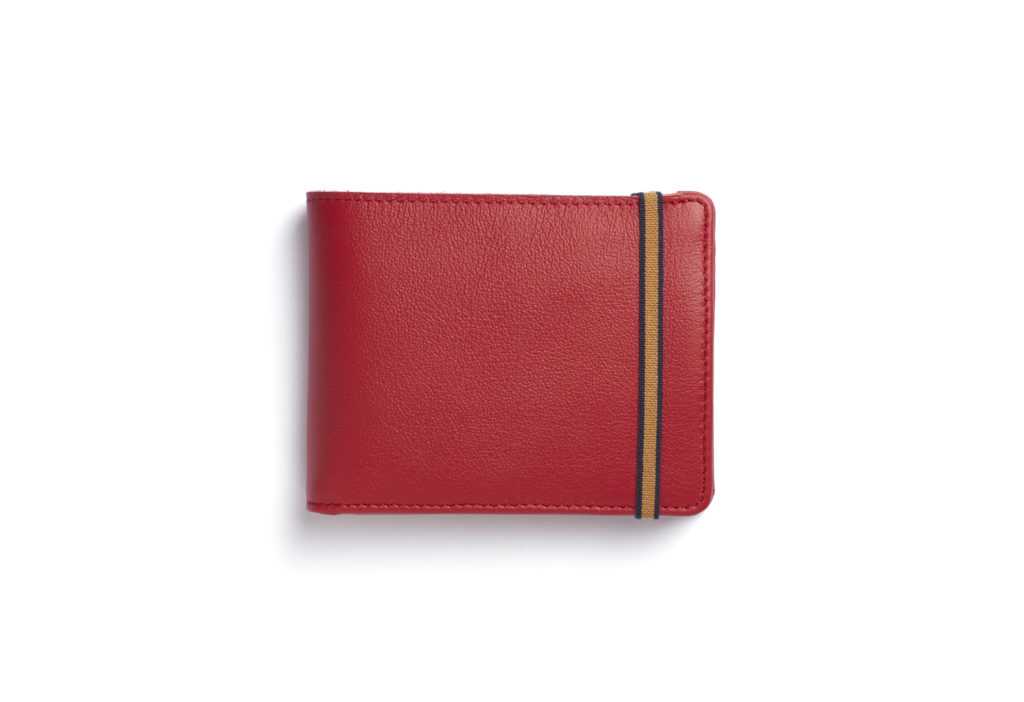
Each piece reflects a belief that refinement emerges from subtraction rather than accumulation. We explore this approach in each of our creations, wallets, wallets with coin pockets, card holders, passport holders, etc…
Elegance, at its most enduring, is composed.
It resides in proportion.
In material authenticity.
In colour sustained with intention.
And within that quiet clarity, it endures.
FAQs – Leather Crossbody Mini Bag
What is a leather crossbody Mini bag?
Why choose this size?
Its smaller scale encourages intentionality while maintaining balance and comfort. It makes us « lighter ». We keep the essentials.
Is it suitable for everyday use?
Yes. When crafted from high‑quality leather with thoughtful organization, it supports daily functionality while preserving refined aesthetics.
Our mini bags contains several compartment, 2 zipped compartements, 8 credit-card slots.
It features a discreet exterior compartment designed to accomodate a smartphone.
An adjustable, detachable strap allows for versatile styling and can be neatly stored inside the bag when not in use.
Which colours are most versatile?
Black, deep brown, navy, and muted earth tones remain timeless. Controlled saturated hues can also integrate seamlessly within a disciplined design.
If you wish to know more about our exploration of colours : yellow, navy blue, cognac, burgundy, Khaki…you should visit our Colour Edit page.
Does leather age well?
High-quality leather develops patina over time, enhancing character while maintaining structural integrity.
At Carré Royal, we only use full grain leathers, we select each skin one, by one.
I personnally check the texture, the touch, of each of it.
I search for a natural grain.
We use both mineral or vegetal tanned leather, according to the collections.
Your mini bag, will become unique, when you wear it. Time and your utilisation will sculpt it.
We only work with French, Belgian, Spanish tanneries, with unique know-how. To know more about our materials or leather, please visit our pages on materials and know-how.
Can it transition from day to evening?
Its compact structure and restrained silhouette allow a mini leather crossbody bag to move effortlessly between casual and formal contexts.
Carré Royal and Minimalism ?
Minimalism is one of the main sources of our inspiration.
I believe our creation should reveal a « thuth », of a material, of a colour.
Carré Royal is a pursuit of Beauty, of an aesthetic ideal,