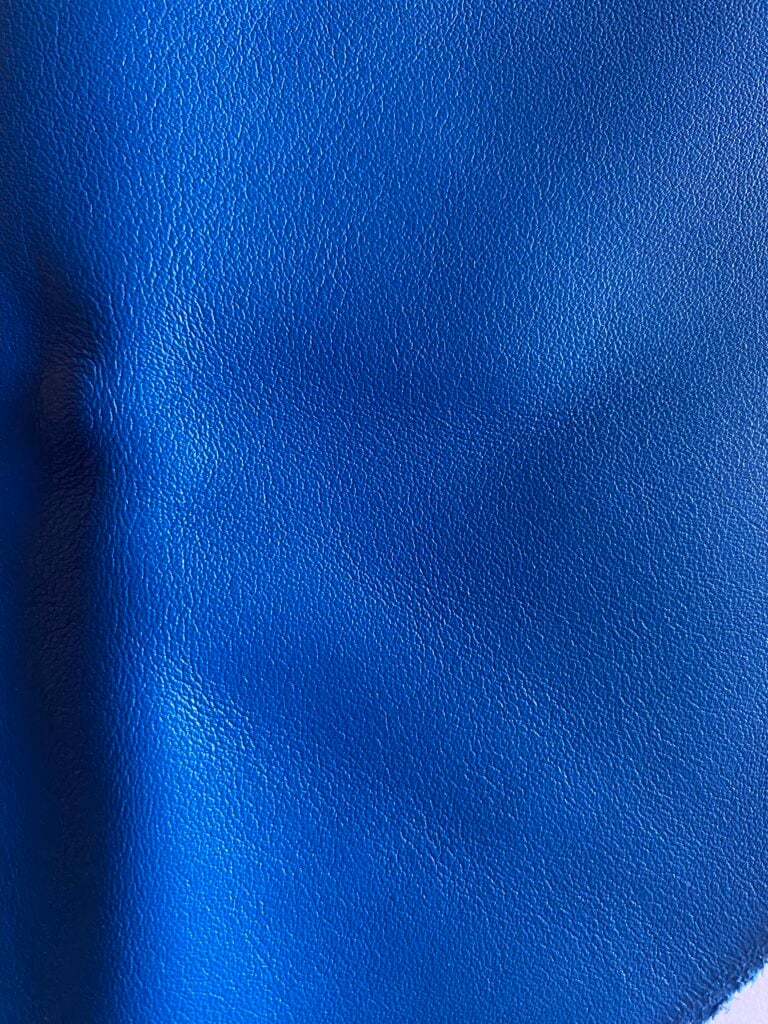
Choosing a leather wallet is an act that deserves thought. Not because it is complicated, but because a wallet is one of the rare everyday objects you touch several times a day, carry everywhere, take out to pay, set down on desks, slip into pockets. It is, in that sense, the most intimate accessory there is.
A poor choice wears out quickly, disappoints, and gets replaced. A good choice improves with time, develops a patina, and eventually comes to resemble the person who carries it. That difference — between an object that passes through your hands and one that stays — is what has guided our work at Carré Royal since 1950.
This guide is not a product comparison. It is an invitation to understand what makes a leather wallet truly valuable — so that you can choose with discernment.
Leather First: The Material Decides Everything
The first criterion — by far the most important — is the quality of the leather. It determines everything: durability, feel, patina, and ultimately the satisfaction you will draw from your purchase five or ten years from now.
There is a hierarchy of leathers that manufacturers have little interest in making too legible. Here it is, clearly.
Full grain leather is the finest available. It refers to the outermost layer of the animal hide — the densest, most resistant part — used exactly as it is, without sanding, buffing or surface correction. Every hide retains its natural grain, its pores, its slight variations: the marks of a living material. This integrity gives full grain leather exceptional durability and the capacity to develop a unique patina over the years. It is the leather of the long view.
Top grain leather has had its surface sanded down to remove imperfections, then coated with an artificial grain and a layer of pigments. More uniform, easier to produce — but also less breathable, less resistant, and incapable of developing a true patina. It ages by cracking, not by deepening.
Bonded leather — often sold under the misleading label “genuine leather” — is made from shredded leather fibres compressed with synthetic binders. It is an economical material with a limited lifespan.
The rule is simple: always look for the words “full grain leather.” Everything else is a compromise.
Tanning: The Soul of the Leather
Behind every leather wallet lies a tanning process — the chemical transformation that makes a hide imperishable and gives it its definitive properties. Tanning is the invisible soul of leather.
Vegetable tanning uses natural tannins extracted from tree barks — mimosa, quebracho, chestnut. It is a slow process, taking several weeks, practiced by tanneries some of which have over a century of history. It produces a leather that is firm at first, gradually softening with use, and developing over time a deep, luminous patina. It is the leather of patience and permanence.
Mineral tanning is faster — a few days suffice — and gives leather immediate suppleness and water resistance. Both methods have their relevance depending on the intended use.
At Carré Royal, we use both depending on the collection, always choosing partner tanneries whose practices we have known for years.
What matters, ultimately, is understanding that tanning is not merely a technical question. It is a question of philosophy: Uniformity or character?
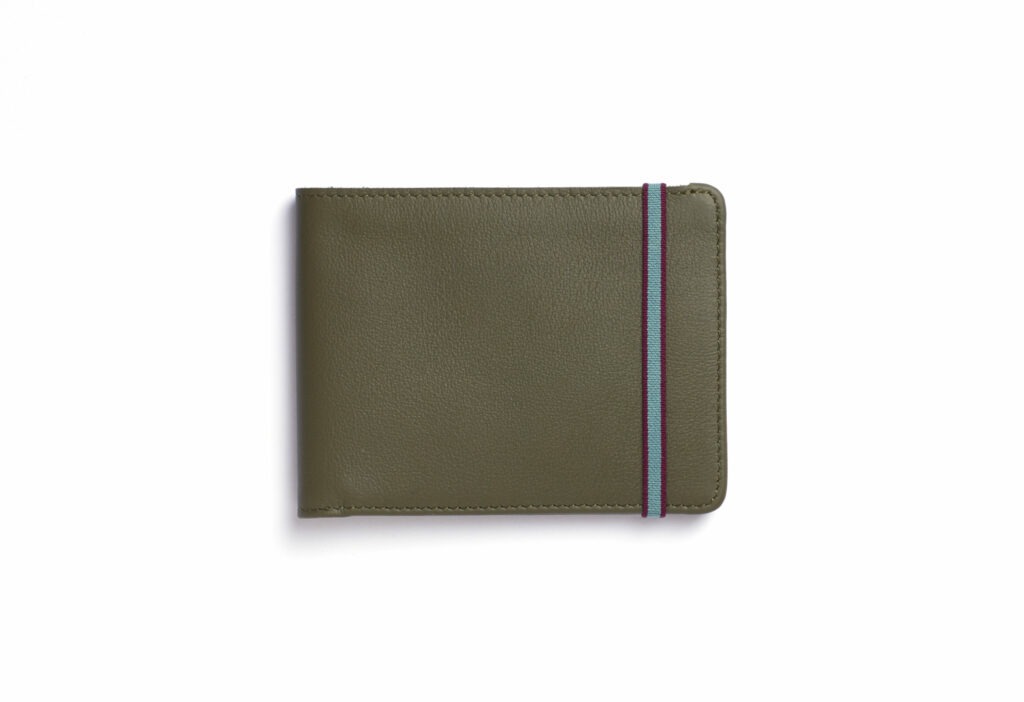
The Hide and the Tannery: Where Does the Leather Come From?
A quality leather wallet begins with a hide hand-selected at a tannery whose expertise is known and trusted. This is not a marketing formula — it is an artisanal reality.
Bull calf leather — taurillon, in French — is particularly well-suited to small leather goods. Its fine grain, natural suppleness and robustness make it an ideal material for a wallet handled every day. At Carré Royal, we select our hides from tanneries in France, Spain, Belgium and Italy, according to rigorous criteria: quality of the hide, fineness of grain, depth of colour, and respect for environmental standards.
Every hide is different. This is precisely what makes every full grain leather wallet genuinely unique — no two are identical, even within the same colour.
During the process, I select myself every final hide, checking the touch, the grain, the texture, the hand.
Format: The Right Question to Ask
Once the leather is chosen, the question of format is simpler than it appears. It comes down to real usage — not trends.
How many cards do you actually carry? Most people overestimate this number. A bank card, a driver’s licence, a transit card, a health card — four to six cards cover the vast majority of daily needs. An oversized wallet that bulges in your pocket or bag is, over time, a poorly chosen wallet.
Do you need a coin compartment? In countries where cash still circulates — and the United States is firmly among them — an integrated coin pocket remains practical. Our wallets with coin compartments answer this need without adding unnecessary bulk.
Card holder or wallet? If you have adopted contactless payment and rarely carry cash, a leather card holder is often more elegant and functional than a classic wallet. It slides into a jacket’s inner pocket without deforming it, and its minimalism is a form of elegance in itself.
The right format is the one that matches your actual habits — not what you think you should carry.
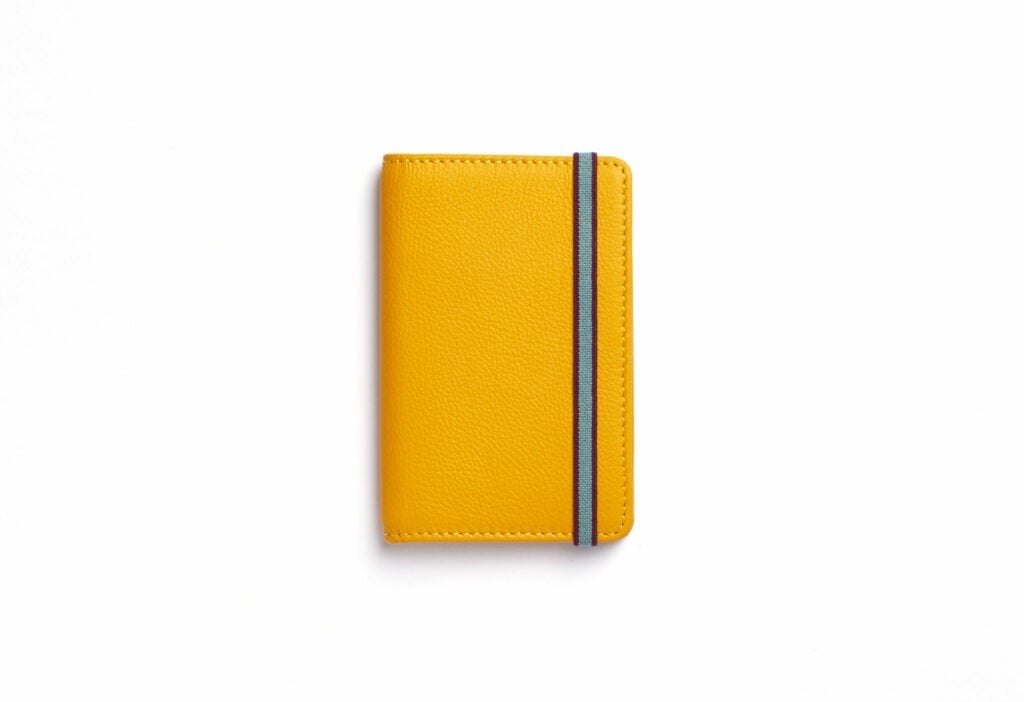
Colour: A Choice That Reveals the Leather
The choice of colour is often treated as a matter of personal taste. It is — but it is also much more than that.
On a full grain leather, colour does not behave as it does on any ordinary surface. It lives. It deepens over time. It reveals the grain, plays with light, patinas differently depending on the angle. A cognac leather wallet will not age the same way as a burgundy one: the former will develop warm, luminous tones; the latter will gain in depth and density.
This is why, at Carré Royal, we bring particular attention to each colour in our palette. Black, navy, cognac, burgundy — each has its own story, its symbolism, its singular way of inhabiting the leather.
For practical guidance, a few simple markers. Classic colours — black, navy, cognac, burgundy — go with everything and age with authority. They are the colours of consistency and discretion. More expressive colours — yellow, red, light blue — are signatures: they say something about the person who carries them, and they say it without ostentation. Choosing a coloured leather wallet is a quiet, daily way of asserting a taste, a sensibility.
Craftsmanship: What the Details Reveal
A leather wallet is also judged by its finishing. It is the details that betray quality — or the lack of it — in the places one does not look at first glance.
Stitching must be regular, tight, with no loose threads. Irregular stitching is not merely an aesthetic issue — it is a future point of failure.
Edges — the finished borders of the leather — are a reliable indicator of manufacturing quality. A burnished, smooth, resistant edge reflects careful work. An edge that frays or peels within the first few months reveals a shortcut taken in production.
Overall thickness must be controlled. A wallet that is too thick even when empty is a poorly designed wallet: it will only grow bulkier with use.
The closure deserves attention. The high-resistance textile elastic we use at Carré Royal provides a secure hold without a fragile mechanism. Avoid magnetic closures on wallets kept near your bank cards.
Durability: An Investment in Time
A well-chosen full grain leather wallet is not an expense — it is an investment in time. A $120 wallet that lasts fifteen years costs less — and creates infinitely more satisfaction — than a $30 wallet replaced every two years.
The durability of a leather wallet rests on three pillars: the quality of the hide (full grain), the quality of the tanning (which determines resistance to friction), and the quality of the construction (stitching, edges, structure). A single failing pillar is enough to compromise the other two.
This is why at Carré Royal, we require our manufacturing partners to meet standardised resistance tests — including the Veslic test — which guarantee the durability of each piece over time.
Caring for Your Leather Wallet
A full grain leather wallet requires no complex care, but a few simple gestures considerably extend its beauty.
Avoid prolonged exposure to direct sunlight, which can alter the uniformity of the colour. If the leather gets wet, dry it gently with a dry cloth — do not rub. Two to three times a year, a pass with a leather nourishing balm suited to smooth leather is enough to maintain the suppleness of the material. And above all: do not try to erase the patina that forms with time. It is precisely what makes your wallet unique.
What We Are Really Looking For
Ultimately, choosing a leather wallet is choosing a daily companion. An object that will be there every morning, that will cross years with you, that will carry the marks of use as evidence of a life fully lived.
The right leather wallet is one you eventually stop thinking about — because it is always there, quiet, reliable, and more beautiful with every year that passes.
Pascal Augéry — Carré Royal
FAQ — Frequently Asked Questions About Choosing a Leather Wallet
What is the difference between full grain leather and genuine leather?
“Genuine leather” simply indicates that a product contains leather, without specifying its quality. Full grain leather refers to the uppermost, most noble layer of the hide, kept without surface correction. All full grain leather is genuine leather, but the reverse is far from true.
What is the best leather for a wallet?
Bull calf full grain leather (taurillon) is ideal for small leather goods: fine grain, natural suppleness, exceptional robustness, and the capacity to develop a beautiful patina with the years.
How do I recognize a quality leather wallet?
Observe the grain — irregular and natural is a good sign. Smell the material — real leather has a characteristic scent. Examine the edges and stitching. Verify that the mention “full grain leather” appears on the product.
Card holder or wallet: which should I choose?
If you carry few cards and rarely use cash, a card holder is often more elegant and practical. If you need a bill compartment and a coin pocket, a compact wallet remains the natural choice.
How do I care for a full grain leather wallet?
Clean with a soft cloth, apply a nourishing balm two to three times a year, avoid direct sunlight and prolonged moisture. Let the patina form naturally — it is the signature of time spent together.
What budget should I plan for a good leather wallet?
Between $100 and $160, you access a serious quality full grain leather wallet, crafted with traceable materials and careful finishing. Below that threshold, compromises on leather quality or construction are nearly inevitable.