
Wabi-sabi is a Japanese aesthetic that finds beauty in imperfection, impermanence and the unfinished. Applied to objects, it names that particular quality of things marked by time and use: a bowl whose glaze has softened, wood polished by hands, a leather whose colour has deepened. Where other traditions look for the new and the intact, wabi-sabi looks at what time gives, not at what it takes away.
Where does wabi-sabi come from?
From the Japanese tea ceremony, essentially. In the sixteenth century, the tea master Sen no Rikyū imposed an aesthetic of restraint: to perfect, precious Chinese porcelain he preferred rustic, irregular bowls with unpredictable glazes. The gesture was radical: beauty no longer resided in the perfection of the object, but in its truth, its humility, its trace of life.
Two words compose the notion: wabi, stripped-back simplicity, almost austere; sabi, the beauty time deposits on things. Together they form a sensibility more than a doctrine: a gaze that welcomes wear, asymmetry and irregularity as so many proofs of life.
The art of kintsugi is its most celebrated gesture: repairing a broken bowl with gold lacquer, not hiding the break but underlining it. The repaired object becomes more precious than the intact one: it has a history.
What does wabi-sabi say about our everyday objects?
That an object is not finished when it leaves the workshop: it begins. The favourite cup whose handle has polished, the linen throw washed a hundred times, the wooden table marked by years of meals: these are the wabi-sabi objects of our homes, and they are almost always the ones we hold dearest.
This sensibility meets an idea we have always defended: the most beautiful objects are those whose beauty lies ahead of them. We survey that family in Materials That Age Well.
Leather patina: a wabi-sabi you carry with you
Of all the materials in our homes, full-grain leather may be the one that lives wabi-sabi most intimately: it is worn, in the pocket, in the hand, thousands of times a year.
A new full-grain leather wallet is a beautiful object. The same wallet, ten years later, is a wabi-sabi object: its edges have softened, its colour has deepened, a sheen has formed where the thumb rests. None of these marks is a flaw; each is a date. Leather keeps the diary of the life it accompanies, exactly as the gold lacquer of kintsugi underlines the story of the bowl.
This is why we ask our customers never to try to even out the patina: it is what makes each piece unique. Our page Leather Patina: What It Is, and How It Develops tells how it forms.
Choosing an object in the wabi-sabi spirit
Three inclinations rather than three rules. Prefer living materials, the ones that answer time: full-grain leather, solid wood, linen, stoneware. Prefer simple forms, which let the material speak: this is where wabi-sabi meets minimalism, two neighbouring sensibilities. And welcome the marks to come: choose an object knowing it will change, and because it will.
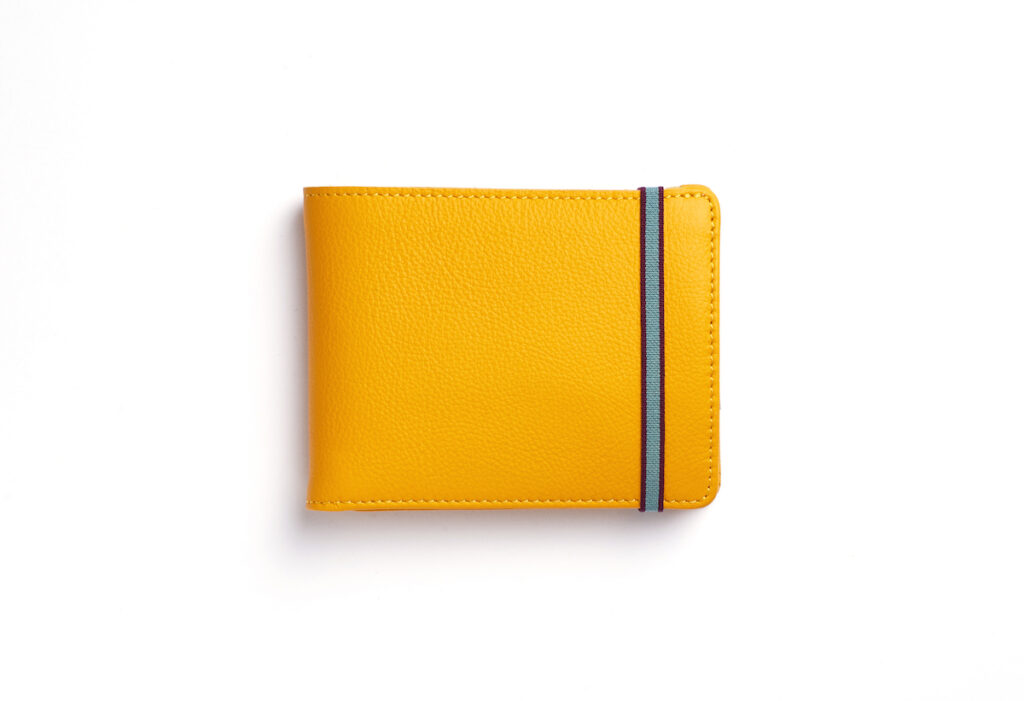
Our wallets, card holders and mini bags are designed in this spirit: clean forms, full-grain taurillon leather selected hide by hide, eight colours of The Color Edit that deepen with the years. Objects that begin the day you carry them.
FAQ
What does wabi-sabi mean?
A Japanese aesthetic that finds beauty in imperfection, impermanence and simplicity: wabi, stripped-back restraint; sabi, the beauty time deposits on things.
What is kintsugi?
The Japanese art of repairing broken ceramics with gold lacquer, underlining the break instead of hiding it. The repaired object gains a history, and value.
Are wabi-sabi and minimalism the same thing?
They are neighbours: minimalism refines form, wabi-sabi welcomes time. A simple object in a living material, developing a patina, unites the two sensibilities.
Is leather a wabi-sabi material?
Full-grain leather, deeply so: it polishes, deepens and marks through use, and each of these evolutions makes it more personal. Patina is a wabi-sabi you carry with you.
How do you care for a wabi-sabi object?
With restraint: feed the material when it asks, and let the marks of time settle without trying to erase them.
