
Vegetable tanning transforms the hide with tannins drawn from barks and plants; Mineral tanning, also called mineral tanning, uses mineral salts.
Both develop a deep patina over the years.
The second is faster and produces a supple leather whose colours stay bright and stable.
Neither is superior to the other: they are two characters, chosen according to the object, the colour and the use.
At Carré Royal, we work with both, depending on the collection.
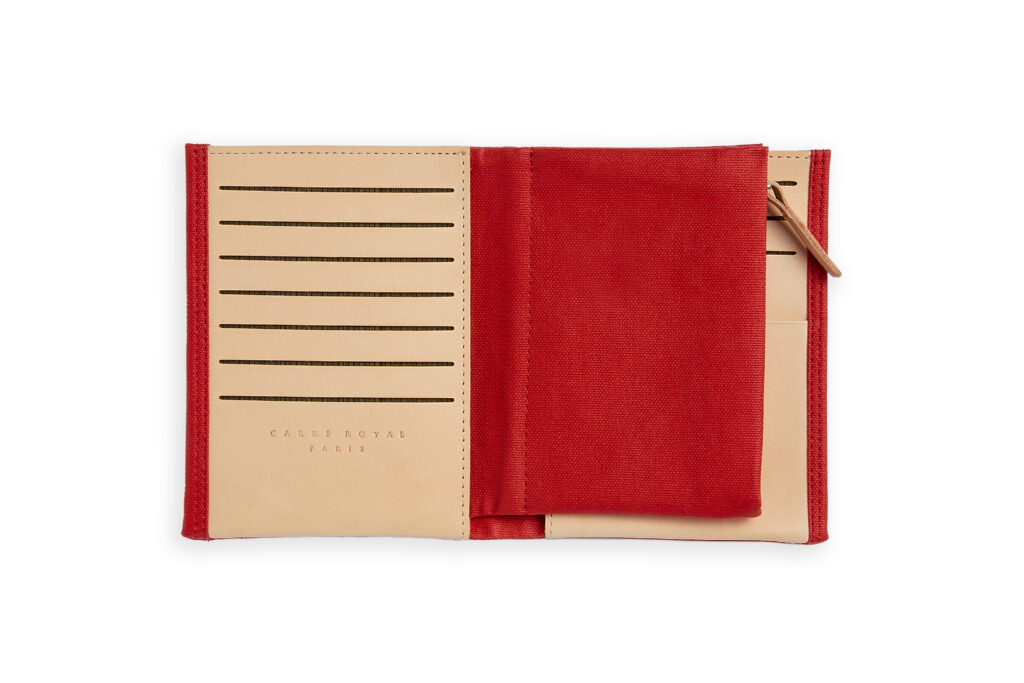
What does tanning actually do?
Tanning is the operation that turns a hide into leather: a stable, lasting material that no longer fears time.
It is one of the oldest crafts in the world. Untreated, a hide stiffens and degrades; tanned, it becomes the living material that can accompany an entire life. Everything we love about leather, its structure, its touch, its capacity to grow more beautiful, begins there.
What is vegetable-tanned leather?
It is the historical method. The hide rests for a long time in contact with natural tannins: oak or chestnut bark, quebracho wood, gall nuts, according to the traditions of each tannery. The process takes weeks, sometimes months.
The leather that emerges has an immediately recognisable character. It is dense and structured, with a firm hand that softens through use. Above all, it lives: it darkens gently in the light, polishes under the hand, and develops over the years one of the finest patinas there is. Natural shades, cognac first among them, suit it particularly well. It is a material that rewards patience.
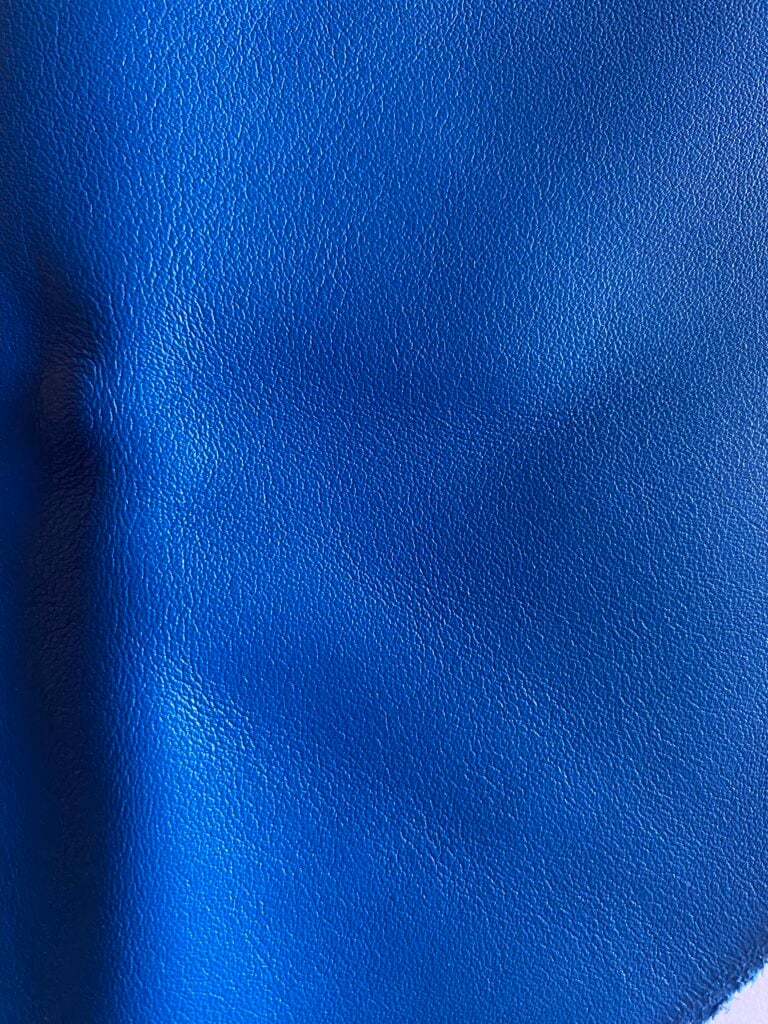
What is Mineral-tanned leather?
It is the most widespread method today, developed in the nineteenth century. Mineral salts stabilise the hide more quickly and produce a leather with qualities of its own: suppleness from the first day, lightness, and excellent colour fastness.
That last point matters greatly to a house of colour. A radiant royal blue, a deep red, a solar yellow all require a leather whose shade stays true through time. Mineral tanning, often completed by dyeing in depth, provides it. Patina exists here too, in a quieter register: the grain polishes, the material softens, the object takes on the mark of the person who carries it.
How do you choose between the two?
By the object and by the colour, rather than on principle.
For an object expected to develop a pronounced, warm, visible patina, vegetable tanning is a natural choice. For an object whose colour is its signature, a precise and vivid shade you want to find intact years later, Mineral tanning is often the right servant.
This is why the question “vegetable or Mineral?” does not call for a single answer, but for a craftsman’s choice, hide by hide and collection by collection.
For « vivid colours », we prefer mineral-tanned leather, that are more stable.
At Carré Royal: both, depending on the collection
We use vegetable tanning and mineral tanning, according to the collections and the shades we seek. What never varies is the rest: full-grain taurillon leather, selected hide by hide for its natural grain, its colour fastness and its aptitude for patina, from European tanneries with long-standing savoir-faire.
Tanning is a means. The end is a just object: a wallet or card holder whose material and colour cross the years together. To continue reading, our page on leather patina tells what time does to these two families of leather.
FAQ
Is vegetable-tanned leather better than Mineral-tanned leather?
No: they are two different characters. Vegetable tanning gives a dense leather with a deep patina;
Mineral tanning gives a supple leather with stable colours. Quality lies in the hide selected and the care taken, not in the method alone.
Both develop a nice patina.
How can you tell if leather is vegetable-tanned?
Vegetable-tanned leather has a firmer hand, and it darkens gently in the light over time. When in doubt, the tannery or the leather maker will know.
Does Mineral-tanned leather develop a patina too?
Yes, in a quieter way: the grain polishes, the material softens and takes on the mark of its owner. The colour itself stays remarkably true.
Which tanning is best for a brightly coloured wallet?
Often Mineral tanning, because it carries vivid shades with great fidelity through time. It is one of the choices that keep a palette of nine colours radiant for years.
Which tannings does Carré Royal use?
Both, depending on the collection: vegetable for certain materials, mineral for others, always on full-grain taurillon leather chosen hide by hide from European tanneries.
