
A few months ago, I wanted to learn more about the Art of Gardens—a major art form in our civilization.
That’s what led me to meet Oriane Guillemet, a landscape engineer.
After seven years on Charles Dard’s team, she founded Ateliers Ecoumènes in 2018. She designs—and often builds—gardens… in Brittany and across France, for local governments, businesses, private clients, and architecture firms.
She helps open the door to this world of aesthetics and art, by talking about her creations—work that keeps changing with the seasons.
Oriane also talks about how sensitive she is to landscapes and the beauty of each place.
And she explains that the term “paysagiste” (landscape designer) originally referred to painters who painted landscapes.
While I was researching, I discovered the thinking of one of today’s major French landscape designers, Michel Corajoud. He reminds us how important it is to keep things simple—remove what’s unnecessary. That idea helps shape what defines our brand, Carré Royal.
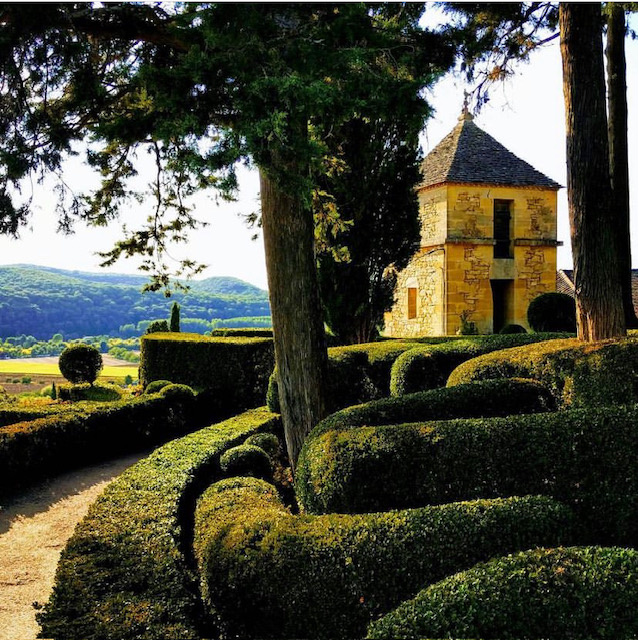
An idealized image of the world…
The appearance of gardens is probably connected to the rise of cities. At first, gardens were “closed” spaces—hortus—where people grew plants to eat, and to heal.
Nature “enters” the city and is domesticated.
The role of gardens changes over time. Sometimes they become open-air palaces for kings—like the Gardens of Versailles, designed by André Le Nôtre for Louis XIV.
Gardens mark a civilization, an era, a culture. They reflect a way of seeing the world tied to religion and the power of important figures. Gardens show—especially—people’s visions and worldview. Humans arrange nature.
They also express our relationship with nature.
In the Christian tradition, gardens are “a world within the world.” They represent a found/recovered Eden—private and protected.
And we can also think of Eastern gardens—like Japanese gardens.
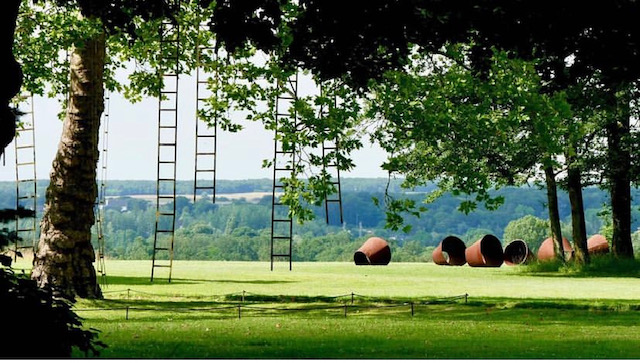
A method, and a sensitivity.
To design a garden, Oriane starts by studying a place within its boundaries—then also studying beyond them, in the surrounding landscape.
She then does a kind of “archaeology” of the space: analyzing plant diversity (plants, trees), ecology, and soil quality.
She studies the site through its history and its natural dynamics—then imagines the connection between the future garden and any buildings, as well as how it will “talk” with the landscape.
She also shares her own sensitivity, something she developed since childhood through travel, discovering works of art, reading, and study.
She shows how deeply connected she is to nature—its expressions in every form—by describing things like the aesthetics of leaves, the shape of trees, the character of plants, and even smells (for example, the smell of humus after the rain).
Through her creations, Oriane reveals places for the people who visit them and live in them… so that they can truly feel good there.
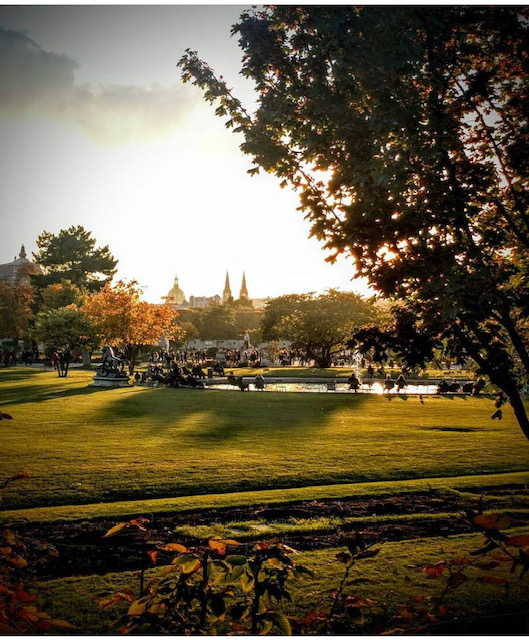
A creation that takes time (and humility)…
Oriane reminds us that her job is many-sided, and that it calls for humility. Even if people have intentions—directing plants and guiding nature—it’s always nature that does the real work.
Creating a garden means learning patience. Her creations won’t reach maturity for many years (20 years? 40 years?).
And of course, everything depends on nature: the climate, and maintenance.
Oriane is full of passion and stories, and she talks about gardens like the Alhambra, Denis and Eugène Bühler, Roberto Burle Marx, and Michel Corajoud.
I invite you to discover Oriane Guillemet’s world on the Ateliers Ecoumènes website, through our Instagram pages (in the stories), and on our Facebook page, where you’ll find far more images of her creations.
Ateliers Ecoumènes was selected to design and build a garden for the 27th International Festival of Gardens at Domaine de Chaumont-sur-Loire : a presentation of one of Oriane’s works, in collaboration with Maeva DE PARIS—Le Chemin de Mélété (inspired by the Greek muse of meditation, exercise, and practice).
To learn more about this newsletter and its author, please visit our Carré Royal Letters page.
If you liked this letter, please share it widely! ✅
Find a garden using online tools
France map:
https://www.parcsetjardins.fr/jardins/carte
Brittany map:
http://www.apjb.org/fr/classification.html
Garden videos (illustrations)
**Jardins suspendus de Marqueyssac:**
**Jardins de Kerdalo – Trédarzec:**
**Roberto Burle Marx: The Unsung Genius of Landscape Design:**
**Landscape Film: Roberto Burle Marx:**
**Les Murs à Pêches de Montreuil:**
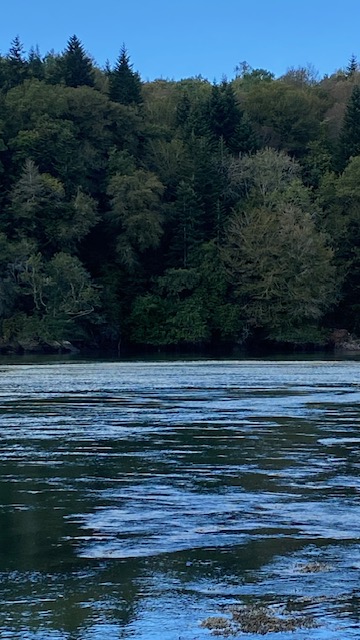
Pierre Grimal’s words…
“The garden has the ambition to be an image of the world. It makes use of the sky’s light, the coolness of water, the fertility of the earth, plants, and the visitors of forests and countryside. It is an ordering of the world.
A garden begins the moment when a human will imposes a purpose that is immediately tangible to natural objects—that is, what is born, grows, and dies according to the laws of nature. A statue borrows its substance and its form from nature (marble or wood, and also the model it represents—animal, human, or plant). But it does not have life. The matter of the garden, however, is free, and its spontaneity escapes the laws of humans.”
Some readings for this letter…
– Les Jardins, by Michel Baridon
– L’Invention du jardin occidental, by Matteo and Virgilio Vercelloni
…and more.
A little music…
– J.S. Bach: Concerto for 2 Violins in D Minor, BWV 1043 – I. Vivace
– Róisín Murphy – Ancora Tu
(Your playlist is also available on Spotify and Deezer.)
An object, when thoughtfully made, carries time within it. This conviction shapes our leather goods, designed not for seasons , but for years.
