
Grégoire Korganow is a researcher—an explorer of beauty.
He welcomes me to his home in Bondy (Bondychery).
The first time I discovered his work, I was unsettled—pushed, jostled… and then I sensed kindness, softness in the way he looks at things.
He talks to me about his art, which he expresses through photography and video.
He speaks about his pursuit of Beauty.

The beginning
Grégoire tells me about his passion—very early for drawing, and then for photography; how he carried his first camera, the one that belonged to his mother.
He also talks about his early work as a photojournalist. For 20 years, he travels across the earth, driven by a romantic, privileged relationship with the world. He collaborates with newspapers and magazines like Libération, National Geographic, Le Monde, The New York Times, Marie Claire, and others…
He remembers how the fall of the Berlin Wall in 1989 affected his generation of photographers.
Then he describes the break after September 11, 2001—this “post-” world.
From the way he tells it, that date marked a strong, radical, violent rupture.
He also talks about how the profession—and photography itself—changed. A different way of telling reality appeared with digital tools.
The “live” moment started to take over more and more.
His work became much more monitored, and images became more controlled.
That’s also when awareness began—questioning, big questions about his own place.
Grégoire then takes a new path.
The quest for beauty
Today, Grégoire Korganow invites us to look differently—into the “hollow,” the quiet space.
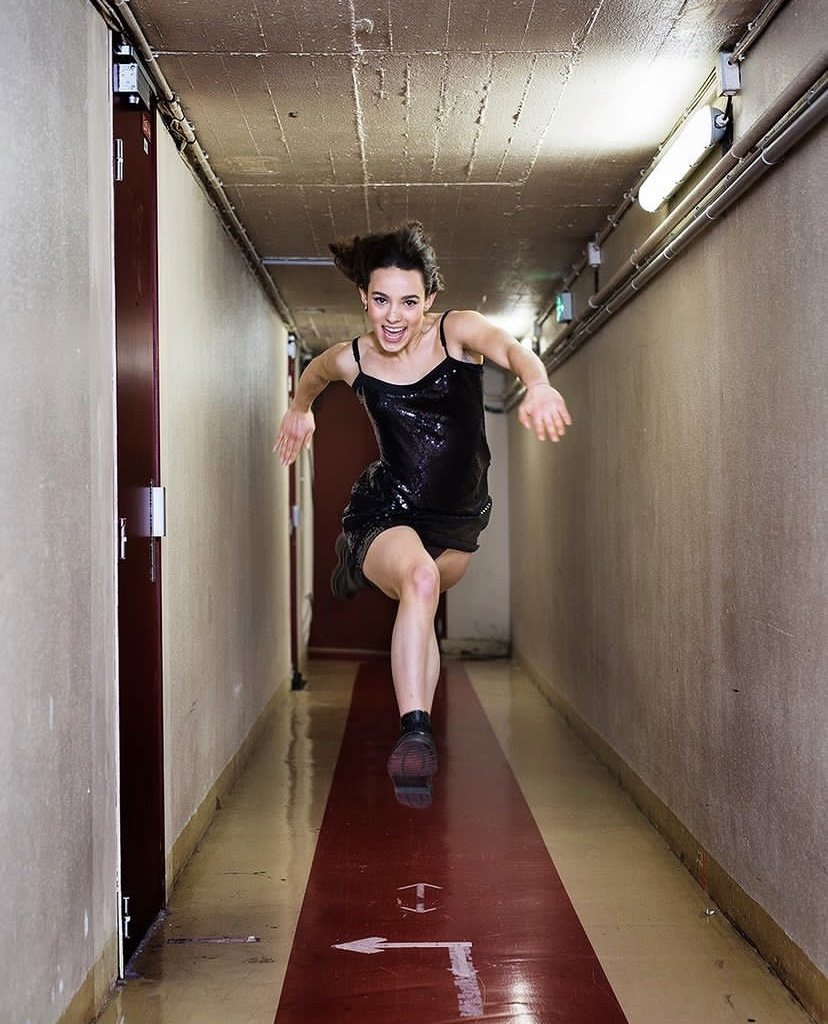
He’s interested in bodies at work—the living body that sweats, breathes, and moves—far from a body that’s only magnified.
He invites us to be truly available to beauty, away from our habits, our shortcuts, and the conditioning we carry.
That openness allows me to open up—and broaden—my own way of seeing.
A new way of looking, in my view, expands our lives too—toward other opportunities, away from being trapped by prejudice, by quick certainties that actually shut us off from the world and from the beauty of existence.
Learning to “see the world” helps us grow—and Grégoire’s work helps us do that.
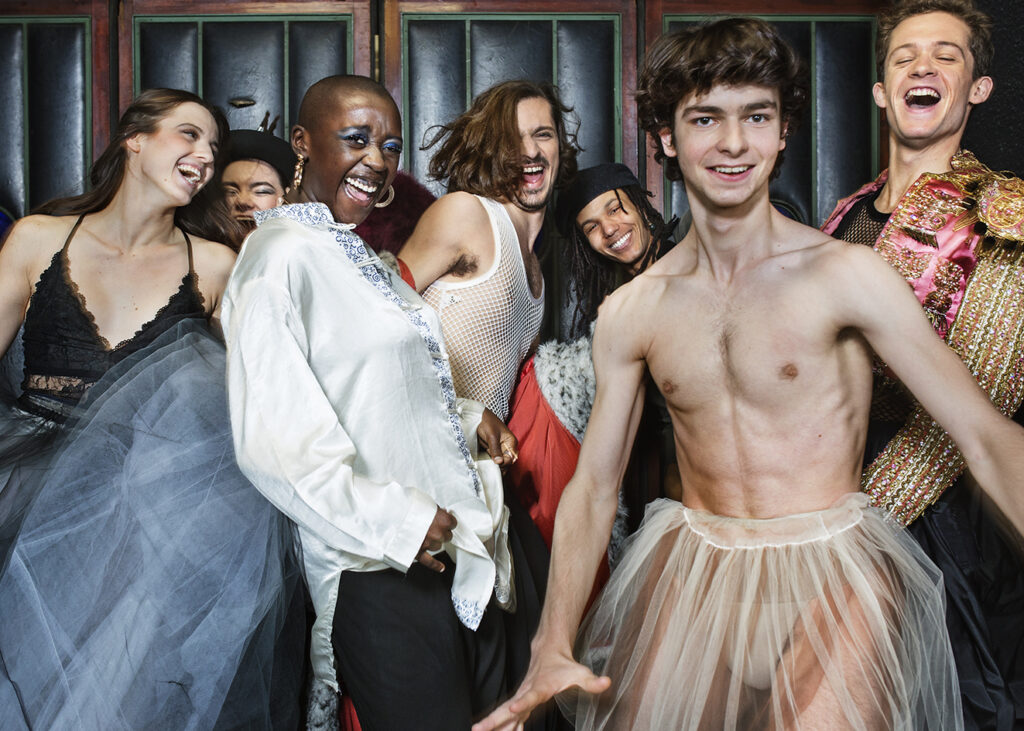
He photographs the back rooms of haute couture runway shows for Marie Claire—he sets himself behind the curtains, right in the middle of pushing, chaos, and noise.
Then he becomes interested in incarcerated people—within prison walls. In 2008, he was an invited guest of honor at the Rencontres d’Arles to present this part of his creation.
He also brings his attention to the relationship between “Father & Son.”
His work is marked by a precise, conscious gaze.

Grégoire’s heroes and heroines
Grégoire talks at length about dancers—men and women—whom he considers his Heroes. He admires them for, among other things, how they accept falling, and the “sacrificial dimension” of dance. He has the feeling he’s meeting real Warriors of Beauty—people who enlarge the world, push past limits, and open paths. They help us get beyond our resistance, to welcome doubt and fragility. They change how we relate to the world.
He also reminds us that they accept being in service of a creation that isn’t theirs—while still staying themselves. That makes me think of Diderot’s “Paradox of the Actor.”
Finally, he talks about his own search for inner calm—an easing in how he relates to the world.
He isn’t afraid of the vitality of disorder, of incoherence, or of sudden bursts of inspiration.
He raises questions about our own inability to simply look at the world—to be amazed by what surrounds us, by encounters.
His work has been exhibited at the Maison de la Photographie in Paris, at (Où), at Visa pour l’Image, the Triennale in Milan, at Mosaïcografia (Porto Alegre), and at the Three Shadows Photography Art Center (Beijing).
Of course, my words aren’t enough to present his considerable work and sensitivity—so I’ll let you discover it.
To learn more about this letter and its author
The photos in this letter—and on our Instagram and Facebook pages—are by Grégoire.
To learn more about this letter and its author, I invite you to visit our page Carré Royal Letters.
If you liked this letter, please share it.
Books and musics of the day :
Sepúlveda :
-
- Un viejo que leía novelas de amor (The Old Man Who Read Love Novels)
- Historias marginales
- Patagonia Express
Radioscopy: André Malraux [1974]
https://www.youtube.com/watch?v=KlotHkckOsE&t=28s
Music
Souad Massi
https://www.youtube.com/watch?v=JXp61_DMXRk
Anima Christi (Marco Frisina)
https://www.youtube.com/watch?v=mQ1myt4-gX4
